Use Of Helium Gas

Helium is a chemical element symbolized by (He) in the periodic table of elements at the top right corner with atomic no. 2. It is derived from the Greek word “Helios,” which means the Sun. Nuclear fusion in stars like the sun produces large volumes of helium from hydrogen. It also holds the second rank in being the lightest and the most abundant element in the observable universe (around 24% of the total elemental mass of the universe). Due to very high nuclear binding energy per nucleon, and therefore, being inert (non- reactive) in nature, it is present in such large volumes around the universe.
In general, it is present in the gaseous form, but it can be liquefied under very high pressure (around 25 atm) and very low temperature (around -269°C).
Helium near absolute zero
Properties of Helium
Helium is a colorless, odorless, tasteless, inert, and non-toxic noble gas.
Physical Properties
At normal atmospheric pressure, solid helium does not exist, hence, it does not account for any melting point, but it has been found that once we raise the pressure to 25 atm, it starts melting around -272.2 °C.
Because of being monatomic in nature and having weak interatomic interactions, Helium’s boiling point is also known to be very low (-269 °C), and that’s why it exists in the gaseous state mostly. At the atmospheric pressure of 1 atm and 0°C, it’s density is found to be 0.000164 g cm−3. The only known gas to have a density less than this is Hydrogen.
Chemical Properties
Helium is used in the semiconductor industry as an inert gas for growing semiconductor crystals, to quickly cool components, and to control heat transfer. Helium is used for leak detection to test.
Chemical properties of any element are observed when it interacts with its surroundings and takes part in various chemical reactions. Being inert in nature, Helium doesn’t take part in many chemical reactions.
The electronic configuration of Helium is 1s2. It is widely known as the least soluble gas in water and has a refractive index closer to one. The helium that is found outside the atmosphere of the earth exists in the plasma state and due to the presence of free electrons in the plasma state, it results in very high electric conductivity.
Highly conductive helium in a discharge tube
/balloons-against-clear-sky-112510015-5766b88d5f9b58346a9b9c1f.jpg "Use Of Helium Gas")
- Helium gas is used as inert shield for arc welding, to suppress the fuel tanks of liquid fueled rockets and supersonic windtunnels. Helium is bonded with oxygen to create nitrogen-free atmosphere for deep-sea divers so that they will not suffer from a condition known as nitrogen narcosis.
- Properties of Helium. Helium is a colorless, odorless, tasteless, inert, and non-toxic noble gas. Physical Properties. At normal atmospheric pressure, solid helium does not exist, hence, it does not account for any melting point, but it has been found that once we raise the pressure to 25 atm, it starts melting around -272.2 °C.
- The largest current use of helium is for cryogenics. The amount of helium used for cryogenics was about 620 million scf (17 million scm) in 1996.
- The closest to 100% pure helium, 6.0 helium is used in the manufacturing of semiconductor chips – the tiny wafers that pack the power behind your smart phones, computers, tablets, televisions, and more. It’s also used in laboratories for scientific research, laser cutting, MRI machines, and as a carrier gas in gas chromatography.
Isotopes
Helium is known to have nine isotopes, out of which only 3-Helium and 4-Helium are stable, all other isotopes are highly radioactive, and therefore, they do not stay for long. The abundance in the earth’s atmosphere of 3-helium and 4-helium is 0.0002% and 99.9998%, respectively.
Occurrence and Production
Most of the helium present in the universe is generated from nucleosynthesis (the process of creating new atomic-nuclei from the pre-existing ones) that happened during the Big Bang.
But the helium present in the earth’s atmosphere comes from the alpha decay of radioactive nuclei.
For industry-centric purposes, helium is extracted by a process of fractional distillation in which the natural gas is distilled under high pressure and low temperature. Due to its low boiling point, other gases from natural gas gets liquified prior, and helium can be isolated.
Helium storage in a natural gas processing plant
Uses of Helium
Being non-reactive in nature, helium can be used in a variety of applications. For the most common example, we all have seen helium balloons being used as an energy-efficient mode of flight during the early 19th century, but that is a very minor application of helium. Nowadays, helium is one of the major ingredients of most of the technological, medical, and industrial advancements. Some of them are discussed below.
1. Industrial Application
Because of its inert nature, helium acts as a shield when it comes to reducing the reactivity of the system with its surrounding. In the arc welding process, helium acts as a barrier between nitrogen and metal, so that it does not pollute the welding.
It can also be used for leak detection in various industries as helium has a very high diffusion rate and does not react much with the atmosphere.
An engineer checking for leaks in a depressurized pipe
2. Medical Application
Due to its cryogenic properties, helium is widely used in heavy machinery like MRI machines, CT-SCANS, and NMR spectroscopy to protect machines from overheating. Many of these machines are used in the detection of major tumors and cancers.
Helium Gas Used In Medical
Some people also use helium balloons for recreational purposes, though it does not have any narcotic properties. People inhale helium from party balloons to make there voice high-pitched as helium is less dense than air and allows sound to travel faster. But it can be a harmful practice as the uncontrolled amount of helium can be fatal.
Helium is also known to be a necessary ingredient when it comes to deep-sea diving. Due to a lower gas density of helium, it helps to flush out nitrogen and even oxygen, which can have drastic effects below 60-70 ft of water.
3. Technological Application
Helium has a very low boiling point, so it is used as a coolant in many technological wonders. Liquid helium is used in the LHC particle accelerator at CERN to cool down the superconducting magnetic coils.

Liquid helium providing near absolute zero temp. at LHC to keep Magnetic coils cool
Also, it is used between the lenses of a telescope to reduce the heating effect caused by light. It is widely used as a gas carrier in gas chromatography. Helium also helps in space missions by keeping the rocket fuel cool during the launch. It is also used as a coolant in nuclear reactors.
Critical Element
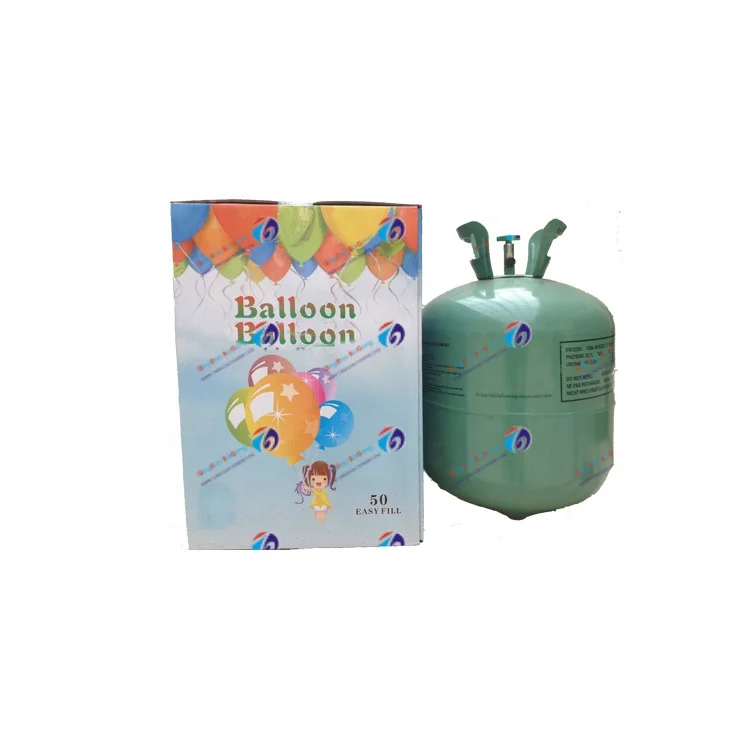
Helium is so lightly dense that if once it is released into the atmosphere it will rise in the upward direction and try to escape the atmosphere, due to which it is hard for scientists to recover it. Prices of helium have already been skyrocketed due to increased demand and low supply. Humankind can look for alternatives and make technological advancements so that helium can be replaced by hydrogen.
Helium production in the United States totaled 73 million cubic meters in 2014. The US was the world's largest helium producer, providing 40 percent of world supply. In addition, the US federal government sold 30 million cubic meters from storage. Other major helium producers were Algeria and Qatar.
All commercial helium is recovered from natural gas. Helium usually makes up a minuscule portion of natural gas, but can make up as much as 10 percent of natural gas in some fields. A helium content of 0.3 percent or more is considered necessary for commercial helium extraction.[1] In 2012, helium was recovered at 16 extraction plants, from gas wells in Colorado, Kansas, Oklahoma, Texas, and Wyoming. One extraction plant in Utah was idle in 2012.
History[edit]
In 1903, an oil exploration well at Dexter, Kansas, produced a gas that would not burn. Kansas state geologist Erasmus Haworth took samples of the gas back to the University of Kansas at Lawrence where chemists Hamilton Cady and David McFarland discovered that gas contained 1.84 percent helium.[2][3][4][5] This led to further discoveries of helium-bearing natural gas in Kansas.
The military was interested in helium for balloons and dirigibles. The US Army built the first helium extraction plant in 1915 at Petrolia, Texas, where a large natural gas field averaged nearly 1 percent helium.[6] The United States Navy established three experimental helium plants during World War I, to recover enough helium to supply barrage balloons with the non-flammable, lighter-than-air gas. Two of the experimental plants were north of Fort Worth, Texas, and recovered helium from natural gas piped in from the Petrolia oil field in Clay County, Texas.[7]
The Mineral Leasing Act, which provided for oil and gas leasing on federal land, reserved all helium contained in natural gas on federal land to the government.[citation needed]
During World War II, military demand for helium rose, so the federal government built a number of new helium extraction plants. One such plant was at Shiprock, New Mexico, to recover helium from gas at the Rattlesnake Field. Gas from the Rattlesnake field, like that of a number of other fields in the Four Corners area, contained mostly nitrogen and very little hydrocarbons, and was produced exclusively for the helium.[8]
The Helium Acts Amendments of 1960 (Public Law 86–777) empowered the U.S. Bureau of Mines to arrange for five private plants to recover helium from natural gas. The Bureau also built a 425-mile (684 km) pipeline from Bushton, Kansas, to connect those plants with the government's partially depleted Cliffside gas field, near Amarillo, Texas. The crude helium (50 percent to 80 percent helium) was injected and stored in the Cliffside gas field until needed, when it then was further purified.[9]
By 1995, a billion cubic meters of the gas had been stored, but the reserve was US$1.4 billion in debt, prompting the Congress of the United States in 1996 to phase out the reserve.[10] The resulting 'Helium Privatization Act of 1996'[11] (Public Law 104–273) directed the United States Department of the Interior to empty the reserve.[12] Sales to government and government contractor began in 1998. Sales to the open market began in 2003. The sales program paid the indebtedness, and is still selling helium.
Geology[edit]
All commercial production of helium comes from natural gas. There are two basic types of commercial helium deposits: natural gas produced primarily for the hydrocarbon content, typically containing less than 3 percent helium; and gas with little or no hydrocarbons, produced solely for the helium, which typically makes up between 5 and 10 percent of the gas. Although natural gas in which helium is only a byproduct contains a much lower percentage of helium, historically it has supplied the most helium.
Use Of Helium Gas In Hindi
Most geologists believe that the majority of helium in natural gas derives from radioactive decay of uranium and thorium, either from radioactive black shales, or granitoid basement rock. Granite and related rocks tend to contain more uranium and thorium than other rock types. However, some believe that the helium is largely primordial.
Unusual geological conditions are considered necessary for commercial concentrations of helium in natural gas. Helium accumulations are commonly in structural closures overlying bedrock highs. Faults, fractures, and igneous intrusives are regarded by some geologists as important pathways for helium to migrate upward into the sedimentary section. The atomic radius of helium is so small that shale, which is effective in trapping methane, allows the helium to migrate upward through the shale pores. Nonporous caprock such as halite (rock salt) or anhydrite is more effective in trapping helium. Helium deposits occur mostly in Paleozoic rocks.
High helium content of natural gas is accompanied by high contents of nitrogen and carbon dioxide. The percentage of nitrogen is usually 10 to 20 times that of helium, so that natural gas with 5 percent or more helium may have little or no methane. A representative sample from the Pinta Dome in Apache County, Arizona, for instance, has 8.3 percent helium, 89.9 percent nitrogen, 1 percent carbon dioxide, and only 0.1 percent methane. In such cases, the gas is produced solely for its helium content.[13]

In the early 20th century, the highest production and largest known reserves of helium were in the gases produced for their hydrocarbon content. The most important of these were the Hugoton, Panhandle, Greenwood, and Keyes fields, all located in western Kansas, and the panhandles of Oklahoma and Texas. The Hugoton and Panhandle fields are particularly large, covering thousands of square miles. The helium content of the gas varies greatly within some fields. In the Panhandle field, helium content is highest, up to 1.3 percent or more, along the updip southwest edge, and lowest, 0.1 percent along the northeast edge.[14]
By 2003, the natural gas fields of the Great Plains of Colorado, Kansas, Oklahoma, and Texas, still held important reserves, but out of 100 BCF of total measured helium reserves in the US, 61 BCF was contained in the Riley Ridge field of western Wyoming, a gas deposit produced for its carbon dioxide content.[15]
The Four Corners area of the southwest US has a number of gas fields containing 5 to 10 percent helium and large percentages of nitrogen, with little or no hydrocarbons. The fields are associated with igneous intrusions. One field, Dineh-bi-Keyah in Arizona, produced oil from a fractured sill. The other fields have no associated oil.
Helium-rich gas fields in the United States
| State | Field | Formation | Age | Percent Helium |
|---|---|---|---|---|
| Arizona | Dineh-bi-Keyah | McKracken Sandstone | Pennsylvanian, Devonian | 4.8 to 5.6[16] |
| Arizona | Pinta Dome | Coconino Sandstone | Permian | 5.6 to 9.8 |
| Colorado | Model Dome | Lyons Sandstone | Permian | 6.7 to 8.3 |
| Kansas | Greenwood | Topeka Limestone, Kansas City Group | Pennsylvanian | 0.4 to 0.7 |
| Kansas | Otis-Albert | Reagan Sandstone | Cambrian | 1.2 to 2.3 |
| Kansas | Ryersee | Chase Group | Permian | 1.4[17] |
| Kansas, Oklahoma, Texas | Hugoton | various | Permian | 0.3 to 1.9 |
| New Mexico | Hogback | Hermosa Formation | Pennsylvanian | 1.4 to 8.0 |
| New Mexico | Rattlesnake | Leadville Limestone, Ouray Limestone | Mississippian, Devonian | 7.5 to 8.0 |
| Oklahoma | Keyes | Morrow (Keyes) Sandstone | Pennsylvanian | 0.3 to 2.7 |
| Texas | Cliffside | various | Permian | 1.7 to 1.8 |
| Texas | Panhandle | various | Permian | 0.1 to 2.2 |
| Texas | Petrolia | Cisco Sandstone | Pennsylvanian | 0.65 to 1.14 |
| Utah | Harley Dome | Entrada Sandstone | Jurassic | 7[18] |
| Wyoming | Riley Ridge | Madison Limestone | Mississippian | |
| If not otherwise cited, source is:[19] | ||||
Processing[edit]
Helium is marketed in two specifications: crude helium, which typically contains 75 percent to 80 percent helium, and Grade A helium, which is 99.995 percent pure.
Storage[edit]
A large volume of helium was stored underground in the Cliffside field in the decade following the Helium Act Amendments of 1960. Incredimail 2 5 plus crack. In recent years, the reserve has been systematically selling its helium. As of 2012 the United States National Helium Reserve still accounted for 30 percent of the world's helium.[20] The reserve was expected to run out of helium in 2018.[20]
As of October 1, 2019 the storage was listed as:[21]
- Government = 2,809,679 Mcf
- Private = 2,429,887 Mcf
Trade[edit]
The United States is a major exporter of helium.
For many years the United States produced more than 90% of the commercial helium in the world. In the mid-1990s, a new plant in Arzew, Algeria, began producing 17 million cubic meters (600 million cubic feet), enough to supply all of Europe's demand.[22] In 2004–2006, two additional plants, one in Ras Laffan, Qatar, and the other in Skikda, Algeria, were built, and Algeria became the second leading producer of helium.[23][24]
In August 2014, the Bureau of Land Management auctioned crude helium from the national reserve at an average price of US$104 per thousand cubic feet of helium content.[25] Grade A helium sold for about $200 per thousand cubic feet, or $7.21 per cubic meter in 2014.
Where To Buy Helium Gas
References[edit]
- ^Helium, Geology.Com.
- ^McFarland, D. F. (1903). 'Composition of Gas from a Well at Dexter, Kan'. Transactions of the Kansas Academy of Science. 19: 60–62. doi:10.2307/3624173. JSTOR3624173.
- ^'Discovery of Helium in Natural Gas at the University of Kansas'. National Historic Chemical Landmarks. American Chemical Society. Retrieved 2014-02-21.CS1 maint: discouraged parameter (link)
- ^Cady, H.P.; McFarland, D. F. (1906). 'Helium in Natural Gas'(PDF). Science. 24 (611): 344. Bibcode:1906Sci..24.344D. doi:10.1126/science.24.611.344. PMID17772798.
- ^Cady, H.P.; McFarland, D. F. (1906). 'Helium in Kansas Natural Gas'. Transactions of the Kansas Academy of Science. 20: 80–81. doi:10.2307/3624645. JSTOR3624645.
- ^Petrolia oilfield, Texas State Historical Association.
- ^Adam Alsobrook, Taking preservation lightly, Texas Historical Commission, 22 Aug. 2013.
- ^'Helium in New Mexico,'New Mexico Geology, v.27 n.4.
- ^'Conservation Helium Sale'(PDF). Federal Register. 70 (193): 58464. 2005-10-06. Retrieved 2008-07-20.CS1 maint: discouraged parameter (link)
- ^Stwertka, Albert (1998). Guide to the Elements: Revised Edition. New York; Oxford University Press, p. 24. ISBN0-19-512708-0
- ^Helium Privatization Act of 1996 Pub.L.104–273 (text)(pdf)
- ^'Executive Summary'. nap.edu. Retrieved 2008-07-20.CS1 maint: discouraged parameter (link)
- ^Daniel S. Turner, 'Natural gas in Black Mesa Basin, northeastern Arizona,' in Natural Gases of North America, v.2, American Association of Petroleum Geologists, Memoir 9, p.1357-1370.
- ^A.P. Pierce and others, 'Uranium and helium in the Panhandle gas field, Texas, and adjacent areas,' US Geological Survey, Professional Paper 454-G, 1964.
- ^B.D. Gage and D.L. Driskill, Helium Resources of the United States – 2003, US Bureau of Land Management, Technical Note 415, June 2004.
- ^Steven L. Rauzi, 'Arizona has helium,'Arizona Geology, winter 2003, v.33 n.4.
- ^Low-BTU Gas in the Permian Chase Group in the Ryersee Field in Western Kansas, Kansas Geological Survey, Open-File Report 2003-57, Nov. 2003
- ^'Harley Dome helium plant starts up,'Oil & Gas Journal, 17 Oct. 2013.
- ^Dwight E. Ward and Arthur P. Pierce, 'Helium,' in United States Mineral Resources, US Geological Survey, Professional Paper 820, 1973, p.289.
- ^ ab@tdnewcomb (2012-08-21). 'There's a Helium Shortage On — and It's Affecting More than Just Balloons Time August 21, 2012'. Newsfeed.time.com. Retrieved 2013-09-16.CS1 maint: discouraged parameter (link)
- ^'Federal Helium Operations'. 1 October 2019. Retrieved 30 December 2019.CS1 maint: discouraged parameter (link)
- ^'Helium End User Statistic'(PDF). U.S. Geological Survey. Retrieved 2008-07-20.CS1 maint: discouraged parameter (link)
- ^Smith, E. M.; Goodwin, T. W.; Schillinger, J. (2003). 'Challenges to the Worldwide Supply of Helium in the Next Decade'. Advances in Cryogenic Engineering. 49. A (710): 119–138. Bibcode:2004AIPC.710.119S. doi:10.1063/1.1774674.
- ^Kaplan, Karen H. (June 2007). 'Helium shortage hampers research and industry'. Physics Today. American Institute of Physics. 60 (6): 31–32. Bibcode:2007PhT..60f.31K. doi:10.1063/1.2754594.
- ^FY2016 helium auction yields 28.54 millionArchived 2015-09-06 at the Wayback Machine, US Bureau of Land Management, 27 Aug. 2015.
How Is Helium Gas Made