Wordpress Mysql

Topics
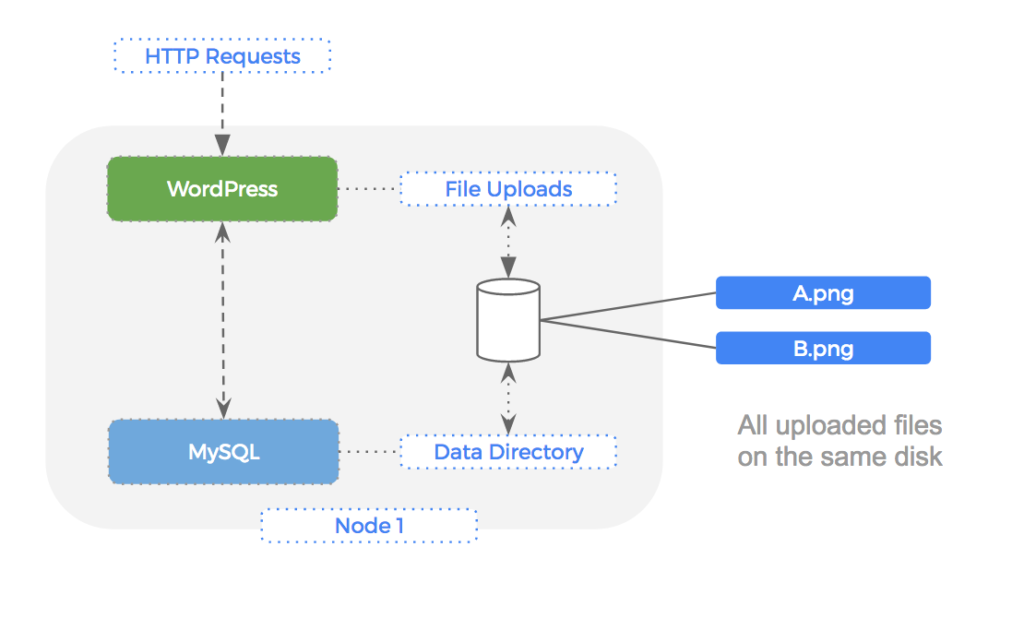
Every WordPress installation has a database in the backend. That’s one of WordPress’ requirements. Now, there are many different database servers you can use with WordPress. From MySQL to MariaDB to Percona and MongoDB, all of these different database servers should work just fine with WordPress. WordPress is one of the most popular blogging tools in the world. Azure Database for MySQL allows users to create, configure and optimize a cloud-based WordPress site that enables easy customization and the ability to handle a large number of site visitors. This locked them out of their site without any other entry. We went in to the phpMyAdmin and created a new admin user to grant them access. In this article, we will show you a step by step guide on how to create an admin user in WordPress Database via MySQL. Note: You should always make a backup of your database before performing any MySQL edits.
If you are installing WordPress on your own web server, follow the one of below instructions to create your WordPress database and user account.
Using Plesk Using Plesk
If your hosting provider supplies the Plesk hosting control panel and you want to install WordPress manually, follow the instructions below to create a database:
- Log in to Plesk.
- Click Databases in the Custom Website area of your website on the Websites & Domains page:
3. Click Add New Database, change database name if you want, create database user by providing credentials and click OK. You’re done!
Using cPanel Using cPanel
If your hosting provider supplies the cPanel hosting control panel, you may follow these simple instructions to create your WordPress username and database. A more complete set of instructions for using cPanel to create the database and user can be found in Using cPanel.
- Log in to your cPanel.
- Click MySQL Database Wizard icon under the Databases section.
- In Step 1. Create a Database enter the database name and click Next Step.
- In Step 2. Create Database Users enter the database user name and the password. Make sure to use a strong password. Click Create User.
- In Step 3. Add User to Database click the All Privileges checkbox and click Next Step.
- In Step 4. Complete the task note the database name and user. Write down the values of hostname, username, databasename, and the password you chose. (Note that hostname will usually be localhost.)
Using Lunarpages.com’s custom cPanel (LPCP) Using Lunarpages.com’s custom cPanel (LPCP)
Lunarpages has developed their own version of cPanel.
- Log in to your account.
- Go to Control Panel.
- Click on the button on the left panel labeled ‘Go to LPCP’.
- Go to MySQL Manager.
- Add the user name and database name but leave the host name as the default IP number.
- Note the IP address of the database on the right which is different from the default IP number of the host indicated in the above step.
- When modifying the
wp-config.phpfile, use the DB IP number, not ‘LOCALHOST’. - When modifying the
wp-config.phpfile, be sure to use the full name of the database and user name, typically ‘accountname_nameyoucreated’. - Refer to http://wiki.lunarpages.com/Create_and_Delete_MySQL_Users_in_LPCP for more info.
Using phpMyAdmin Using phpMyAdmin
If your web server has phpMyAdmin installed, you may follow these instructions to create your WordPress username and database. If you work on your own computer, on most Linux distributions you can install PhpMyAdmin automatically.
Note: These instructions are written for phpMyAdmin 4.4; the phpMyAdmin user interface can vary slightly between versions.
- If a database relating to WordPress does not already exist in the Database dropdown on the left, create one:
- Choose a name for your WordPress database: ‘wordpress’ or ‘blog’ are good, but most hosting services (especially shared hosting) will require a name beginning with your username and an underscore, so, even if you work on your own computer, we advise that you check your hosting service requirements so that you can follow them on your own server and be able to transfer your database without modification. Enter the chosen database name in the Create database field and choose the best collation for your language and encoding. In most cases it’s better to choose in the “utf8_” series and, if you don’t find your language, to choose “utf8mb4_general_ci” (Reference: [1]).
2. Click the phpMyAdmin icon in the upper left to return to the main page, then click the Users tab. If a user relating to WordPress does not already exist in the list of users, create one:
- Click Add user.
- Choose a username for WordPress (‘wordpress’ is good) and enter it in the User name field. (Be sure Use text field: is selected from the dropdown.)
- Choose a secure password (ideally containing a combination of upper- and lower-case letters, numbers, and symbols), and enter it in the Password field. (Be sure Use text field: is selected from the dropdown.) Re-enter the password in the Re-typefield.
- Write down the username and password you chose.
- Leave all options under Global privileges at their defaults.
- Click Go.
- # Return to the Users screen and click the Edit privileges icon on the user you’ve just created for WordPress.
- # In the Database-specific privileges section, select the database you’ve just created for WordPress under the Add privileges to the following database dropdown, and click Go.
- # The page will refresh with privileges for that database. Click Check All to select all privileges, and click Go.
- # On the resulting page, make note of the host name listed after Server: at the top of the page. (This will usually be localhost.)
Using the MySQL Client Using the MySQL Client
You can create MySQL users and databases quickly and easily by running mysql from the shell. The syntax is shown below and the dollar sign is the command prompt:
The example shows:
- that root is also the adminusername. It is a safer practice to choose a so-called “mortal” account as your mysql admin, so that you are not entering the command “mysql” as the root user on your system. (Any time you can avoid doing work as root you decrease your chance of being exploited.) The name you use depends on the name you assigned as the database administrator using mysqladmin.
- wordpress or blog are good values for databasename.
- wordpress is a good value for wordpressusername but you should realize that, since it is used here, the entire world will know it, too.
- hostname will usually be localhost. If you don’t know what this value should be, check with your system administrator if you are not the admin for your WordPress host. If you are the system admin, consider using a non-root account to administer your database.
- password should be a difficult-to-guess password, ideally containing a combination of upper- and lower-case letters, numbers, and symbols. One good way of avoiding the use of a word found in a dictionary is to use the first letter of each word in a phrase that you find easy to remember.
If you need to write these values somewhere, avoid writing them in the system that contains the things protected by them. You need to remember the value used for databasename, wordpressusername, hostname, and password. Of course, since they are already in (or will be shortly) your wp-config.php file, there is no need to put them somewhere else, too.
Using DirectAdmin Using DirectAdmin
a. If you’re a regular User of a single-site webhosting account, you can log in normally. Then click MySQL Management. (If this is not readily visible, perhaps your host needs to modify your “package” to activate MySQL.) Then follow part “c” below.
b. Reseller accounts Admin accounts may need to click User Level. They must first log in as Reseller if the relevant domain is a Reseller’s primary domain… or log in as a User if the domain is not a Reseller’s primary domain. If it’s the Reseller’s primary domain, then when logged in as Reseller, simply click User Level. However if the relevant domain is not the Reseller’s primary domain, then you must log in as a User. Then click MySQL Management. (If not readily visible, perhaps you need to return to the Reseller or Admin level, and modify the “Manage user package” or “Manage Reseller package” to enable MySQL.)
c. In MySQL Management, click on the small words: Create new database. Here you are asked to submit two suffixes for the database and its username. For maximum security, use two different sets of 4-6 random characters. Then the password field has a Random button that generates an 8-character password. You may also add more characters to the password for maximum security. Click Create. The next screen will summarize the database, username, password and hostname. Be sure to copy and paste these into a text file for future reference.
Every WordPress installation has a database in the backend. That’s one of WordPress’ requirements.
Wordpress Mysql Password
Now, there are many different database servers you can use with WordPress. From MySQL to MariaDB to Percona and MongoDB, all of these different database servers should work just fine with WordPress.
Because you can’t use all of them at the same time, you must select one to use with WordPress. For this post, we’re going to be using MySQL databases to connect WordPress.
This brief tutorial is going to show you how to create WordPress MySQL database and user, and how to grant the user rights to manage the WordPress database.
To get started with managing WordPress’ MySQL databases, follow the steps below:
Step 1: Install MySQL
If you haven’t installed MySQL yet, the commands below show you how to install it on Ubuntu.
During the installation, you’ll be prompted to create and confirm a new root password for MySQL. Please type and confirm a password to continue.
This is the same password you’ll use to sign onto MySQL server.
Step 2: Sign on and Create a WordPress Database and User
After the database server has been installed, run the commands below to sign onto the database.
sudo mysql- u root -p
You’ll be prompted for a password. type the password you created earlier during the installation.
After signing on to MySQL database server, run the commands below to create a new WordPress database called wpdb.
CREATE DATABASE wpdb;
This will create a new WordPress database called wpdb.
After creating the WordPress database, you’ll also need to create a database user. This account will be used by WordPress to interact with the database. To create the database user named wpuser, run the commands below.
CREATE USER 'wpuser'@'localhost' IDENTIFIED BY 'type_user_password_here';
The above commands create a new database user called wpuser.
Now you should have both the database and user created. The user does have not any rights to the database. In order for the database user to interact on behalf of WordPress, including making changes to the data in the database, the user will need the rights to do these things.
To give the user full rights to mange the database, run the commands below
GRANT ALL ON wpdb.* TO 'wpuser'@'localhost';
The commands above grant wpuser all rights to manage all the tables in the wpdb database.
To grant the user right to a single table, run the commands below Ahnlab tms.
GRANT <permission> ON wpdb.<table> TO 'wpuser'@'localhost';
Replace <permission> with one of these permission levels.
Wordpress Mysql Version
- SELECT – gives the user permission to use the select command to fetch data from tables
- INSERT – gives the user permission to add new rows into tables
- UPDATE – gives the user permission to modify the existing rows in tables
- DELETE – gives the user permission to delete existing rows from tables
- CREATE – gives the user permission to create new tables or databases
- DROP – gives the user permission to remove existing tables or databases
- ALL PRIVILEGES – gives the user permission to have unrestricted access on a database or the whole system(by using an asterisk in the database position)
Wordpress Mysql 8
This is how WordPress databases and users are created on MySQL.
Summary:
This post shows students and new users how to create databases, users and grant users access to databases. After creating the database and the user, you can then configure WordPress to use it.
Wordpress Mysql Url
You may also like the post below: